
Amazon
ग्रेट इंडियन फेस्टिवल सेलजल्द शुरू होगा
पसंद का सामान आज ही कार्ट में जोड़ें, ताकि सेल शुरू होने पर ऑफर और छूट आसानी से देख सकें।
📅शुरू: 8 अक्टूबर 2026 • 2 दिन बाकी
Setting up or refreshing a Pooja Ghar is a deeply personal and spiritual journey. Whether you are arranging a beautiful new altar in a new home or revitalizing your existing space, having the right essentials is key to beginning every morning with peace and clarity. We understand that maintaining a Pooja Ghar is a cherished daily routine in Indian households. There is nothing more calming than having everything you need—from fragrant incense to the perfect diya—readily available, so you can focus entirely on your prayers without distraction. We have curated this complete Pooja Samagri Checklist to help you keep your essentials in stock. Whether you are performing a daily aarti, preparing for a Satyanarayan Katha, or gearing up for festivals like Diwali and Navratri, this list ensures your sacred space is always ready for a fresh, divine start. Check the prices and order everything you need directly via the links provided, and get it delivered conveniently to your home in advance.
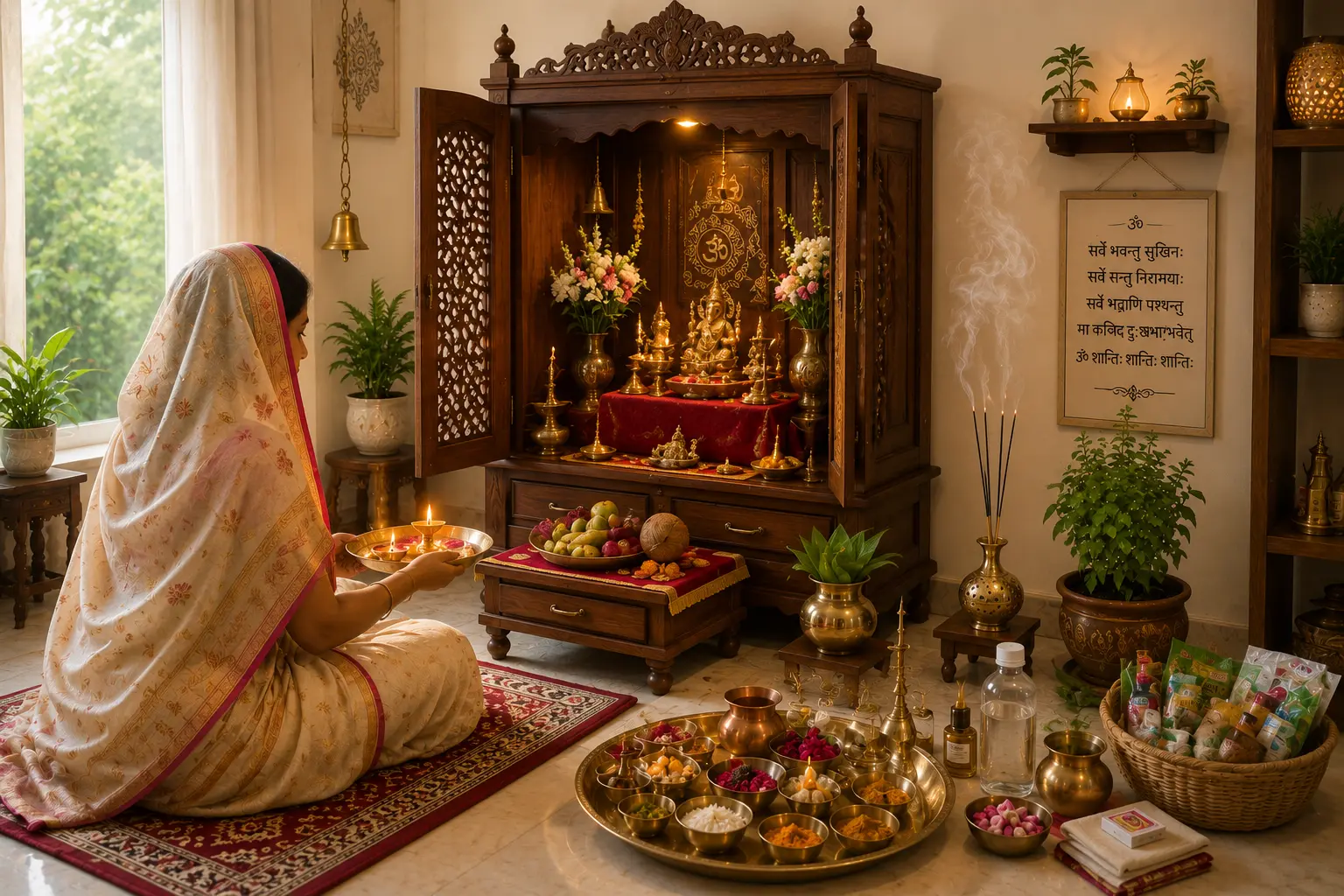
The everyday essentials of worship — रोज़ाना पूजा के लिए दीया, अगरबत्ती, कुमकुम और फूल ये चार चीज़ें हर घर में होनी चाहिए। These are the core consumables that need regular replenishment. Check items →
The foundation of a pooja ghar — पूजा घर का मंदिर घर का सबसे पवित्र कोना है। Right size, right wood and right placement makes worship meaningful and organised every day. Check items →
The heart of every pooja ghar — पूजा घर में देवताओं की मूर्ति या तस्वीर उपासना का केंद्र है। Brass, marble, clay and silver idols each carry different ritual significance. Check items →
Brass and copper vessels are considered most pure for puja — पूजा में पीतल और ताँबे के पात्र सबसे शुद्ध माने जाते हैं। These are one-time purchases that last generations with proper care. Check items →
Special items needed for specific festivals and functions — हर त्योहार और पूजा के लिए विशेष सामग्री होती है। From Diwali Lakshmi Puja to Navratri Sthapana to Satyanarayan Katha — each function has its own required checklist. Check items →
Mantra, puja vidhi and katha — पूजा का पूरा लाभ तभी मिलता है जब सही मंत्र, विधि और कथा से पूजन हो। Essential books for daily aarti, Satyanarayan Katha and festival puja. Check items →
A beautifully decorated pooja room elevates the worship experience — सजा हुआ पूजा घर भक्ति और शांति का अनुभव और गहरा करता है। Torana, rangoli, wall art, incense holders and sacred symbols complete the sacred space. Check items →
One-time or occasional special puja items — गृह प्रवेश, विवाह, नामकरण, मुंडन और वास्तु शांति के लिए विशेष सामग्री जो रोज़ नहीं बल्कि जीवन के खास मौकों पर चाहिए। Check items →
• Create your personalized list by selecting the items you need. • Use the available filters to quickly find items that match your requirements. • Adjust quantities, units, and preferred brands whenever available. • Review and update your list anytime to avoid missing important items. • Easily share your list with family members, colleagues, or shopkeepers. • You can also explore helpful tips, FAQs, and related lists available below on this page.
क्या इस लिस्ट से आपको अपनी तैयारी में कुछ मदद मिली?
A basic home puja kit includes a copper or brass diya, a small lota for water (achaman), a bell (ghanti), an incense stick holder (agarbatti stand), a thali for offerings, and a clean cloth for the mandir base. Additionally, keep stock of basics like cotton wicks (batti), kumkum, sandalwood paste (chandan), camphor (kapoor) and gangajal.
To keep your pooja ghar well-stocked, use a checklist to monitor consumables like cotton wicks, oil/ghee, agarbatti, and camphor. By checking your inventory once a month against this list, you can order supplies online in advance via the provided links. This ensures you never run out of essentials during daily prayers or special festival preparations.
Setting up a mandir in a new home begins with selecting a location in the North-East corner (Ishan Kona) as per Vastu. Choose a clean, quiet space away from bathrooms and stairs. Start by placing a sturdy mandir structure (Sheesham or Teak wood is ideal), followed by a clean cloth, your chosen deity idols, and essential ritual items like a diya, bell, and kalash. Consecrate the space with a simple puja or housewarming ritual to invite positivity into your new home.
Agarbatti (incense sticks) are thin bamboo sticks coated with fragrant paste — burned daily in puja for fragrance and a calming atmosphere. Dhoop is a thicker incense without a stick, made from herbs, resins and ghee — produces more smoke and is used in havan and special pujas. Sambrani (Loban / Benzoin resin) is burned on hot charcoal to produce dense purifying smoke — traditionally used to cleanse a space and believed to ward off negative energy. All three are vegetarian and plant-based.
Sheesham (Indian Rosewood) is the most traditional and widely used wood for home mandirs — it is hard, durable, beautifully grained and takes carving well. Teak (Sagwan) is also highly valued for its durability and termite resistance. MDF with veneer or laminate is used in modern mandirs for affordability. Peepal and mango wood are also considered auspicious in Indian tradition.
Pure brass items are solid brass alloy (copper and zinc) throughout — heavy, long-lasting and develop a natural patina. Brass-plated items have a thin brass coating over cheaper metal — lighter and less expensive but the coating wears off over time. Panchdhatu (five metals — gold, silver, copper, zinc, iron) items are considered most auspicious in Hinduism and are used for deity idols and special ritual vessels.
According to Vastu Shastra, the North-East corner (Ishan Kona) of the home is considered the most auspicious direction for placing a pooja room or mandir. The deity should ideally face East or West, and the worshipper should face East while praying. The mandir should not be placed in the bedroom, bathroom wall, or directly under a staircase.
Fresh flowers, tulsi leaves and naivedyam (food offering) should ideally be offered fresh each day during daily puja and replaced. Wilted flowers should not remain on the deity overnight. Dry flowers and petals from the previous day are considered no longer pure for offering. Tulsi leaves offered in the morning can remain but should be replaced the next day.
A kalash is a sacred copper or brass pot with a wide base, narrow neck and flared mouth — it symbolises abundance and is used in Griha Pravesh, Satyanarayan Katha and festival pujas filled with water, mango leaves and a coconut on top. A lota is a smaller round water vessel used for daily achaman (ritual sipping of water), abhishek and offering water to the sun. Both are used in different ritual contexts.